简体中文
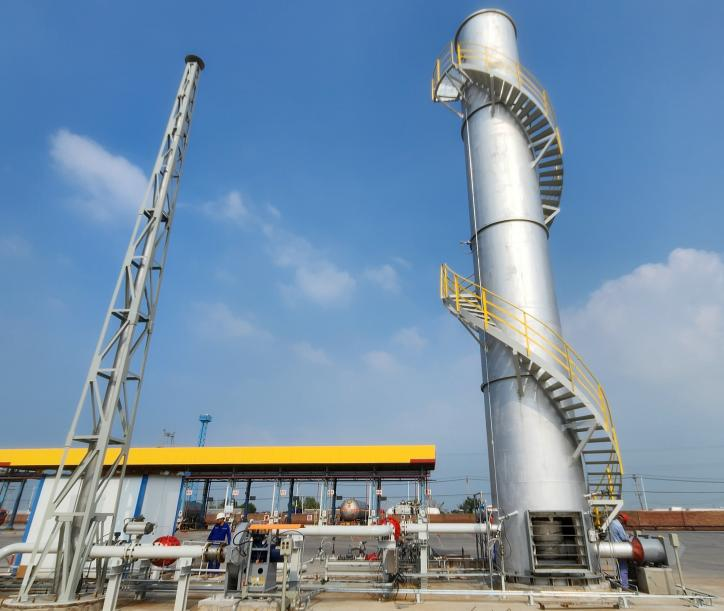
简体中文The VOCs oil and gas treatment facility in the loading area of the southern plant of Dongying Hualian Petrochemical has been successfully operational
In active response to the national "dual carbon" strategy and environmental protection policy requirements, and to promote green and low-carbon development, this project utilizes advanced oil and gas treatment facilities (VCU) to efficiently manage VOCs emissions generated during oil product loading operations, achieving energy conservation and emission reduction, and supporting the sustainable development of customers.
The loading area, as a key link in VOCs emissions in the petrochemical industry, has a direct impact on regional air quality and environmental compliance. The working conditions in the loading and unloading pits involve oil and gas oxygen content exceeding 8% and oil and gas concentrations within the explosive limit range. The main components of the oil and gas processed by the 3000Nm3/h oil and gas "incineration" device in the loading area are N2, O2, and volatile oil and gas from gasoline and diesel. The transformation aims to achieve "high-efficiency emission reduction, safety and reliability, energy conservation and consumption reduction" as its core objectives. It introduces leading oil and gas incineration technology for customers, converting VOCs into carbon dioxide and water with a treatment efficiency of over 99%, significantly reducing VOCs emission concentration and improving the environmental quality of the plant area. Combined with a modular intelligent control system, an efficient and stable oil and gas treatment system is created.
Key equipment is prefabricated in the factory and quickly assembled on-site, reducing the construction period by 40% compared to traditional construction methods, minimizing on-site operational risks, and lowering overall costs. This approach has received high praise from customers.